
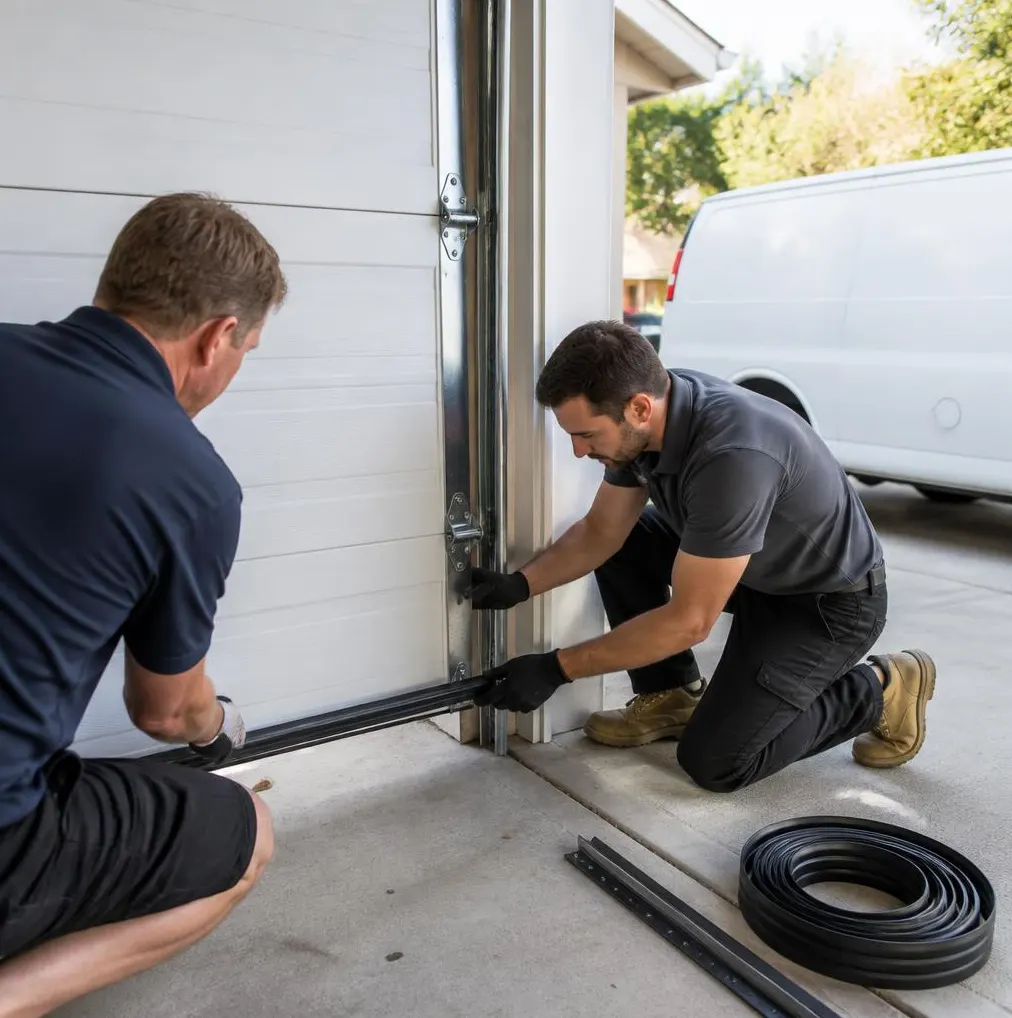
A Typical Call
The call usually starts the same way: "My garage door won't open, and I don't know why." The homeowner has already tried the remote a few times, maybe mashed the wall button, and now the car's stuck inside or outside and they need to leave. When a technician pulls up, the first thing they do isn't touch the door — it's look at the opener's indicator light and listen to what the motor does (or doesn't do) when the button is pressed. That single step usually narrows the problem down to one of a few categories before a single tool comes out.
What "Won't Open" Actually Looks Like
Not every stuck door behaves the same way, and the symptom often points to the cause before any testing starts:
- Opener hums but the door doesn't move — motor is getting power but something mechanical is blocking it.
- Complete silence, no lights, nothing — points to power, not mechanics.
- Door opens a few inches then stops or reverses — often a sensor or obstruction issue, not a dead system.
- Door won't budge even by hand — almost always a spring or cable problem, and a safety concern.
The Order a Technician Checks Things
1. Safety Sensors (Photo Eyes)
This is checked first because it's the most common cause and the fastest to rule out. The two small sensors near the bottom of the track need a clear, aligned line of sight. Monsoon dust storms leave a fine film on the lenses, and a knocked bike or stored item can nudge one out of alignment. A blinking light on the opener is usually the tell. The fix is simple: wipe the lenses and realign the brackets until the light goes solid.
2. Power Supply
Next is the outlet and breaker. Garage circuits sometimes share a breaker with other high-draw items, and extreme summer heat is hard on outlets and wiring insulation over time. A tripped breaker or a dead outlet means the opener never had a chance.
3. Remote and Wall Control Batteries
If the wall button works but the remote doesn't, it's batteries or a remote that needs reprogramming. Desert heat shortens battery life faster than milder climates, so this gets checked before anything more involved.
4. The Manual Disconnect
Every opener has a release cord for manual operation during power outages. If it's been pulled — often by a curious pet, a stored item catching it, or someone forgetting to reset it — the opener will run but never actually lift the door. Resetting it is quick once it's spotted.
5. Springs
If the door won't move even when manually lifted, a technician checks the springs next. A broken torsion or extension spring means the door has no assistance and is far too heavy to lift safely. Desert heat cycles — scorching afternoons followed by cool nights — stress metal springs over time and shorten their lifespan. This is not a DIY fix; spring replacement requires the right tools and knowledge of the tension involved.
6. Cables, Pulleys, and Rollers
A frayed or snapped cable, a rusted pulley, or a roller off its track can jam the door partway. These get inspected visually and replaced as needed.
7. Opener Motor and Gears
Last on the list because it's the least common cause: a stripped plastic gear inside the opener or a motor that's overheated and shut down. Years of summer heat soaking into an attached garage can shorten an opener's working life, especially older units without heat-rated components.
When to Call Oro Valley Garage Door Co
If the sensors are clean and aligned, the power's fine, and the door still won't open, it's time to call. We handle everything from Garage Door Opener Repair & Installation to Spring Replacement, and we carry parts suited to the heat and dust this area deals with. If the door's stuck shut overnight or during a weekend, our Emergency Garage Door Service gets someone out without the wait.
If your garage door in Oro Valley or the surrounding Tucson area won't open, give Oro Valley Garage Door Co a call — we'll find the cause fast and get it moving safely.