
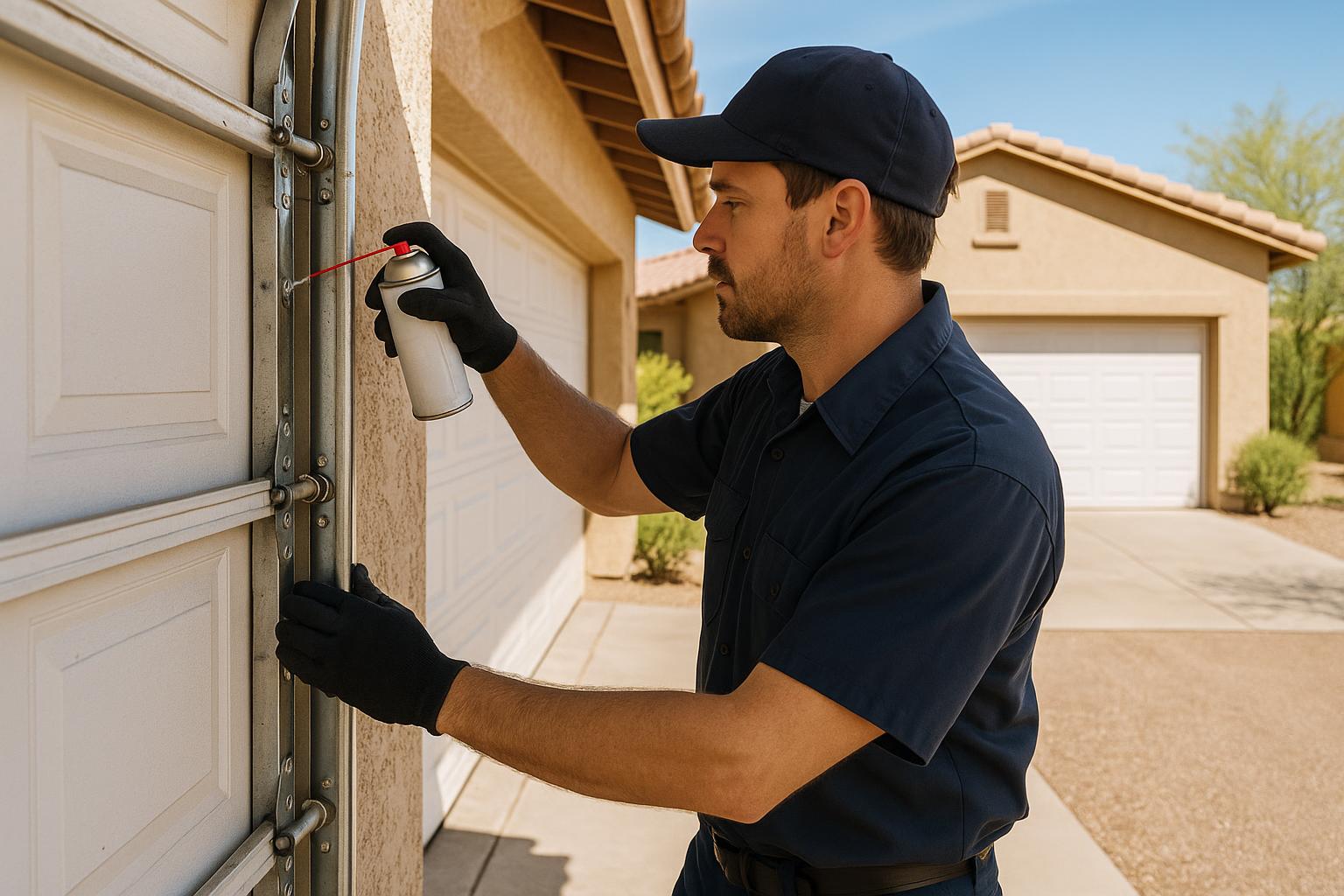
Your Garage Door Works Hard — It Deserves Some Attention
Think about how many times you open and close your garage door each day. For most families in Oro Valley, it's at least four times — sometimes more. That adds up to well over a thousand cycles per year, and every single one puts stress on springs, cables, rollers, hinges, and the opener.
Despite being the largest moving part of your home, the garage door is one of the most neglected when it comes to regular maintenance. Most homeowners don't give it a second thought until it starts making strange noises, moves unevenly, or stops working altogether.
The good news? A little preventive maintenance goes a long way. In this post, we'll break down how often your garage door should be serviced, what a proper maintenance visit includes, and why it matters — especially here in the Tucson area where heat and dust take a real toll on garage door components.
How Often Should You Schedule Garage Door Maintenance?
The short answer: at least once a year. For most residential garage doors, an annual professional tune-up is enough to catch small problems before they turn into expensive repairs.
However, there are situations where you may want to schedule service more frequently:
- Heavy daily use: If your garage door opens and closes six or more times per day, consider maintenance every six months.
- Older garage doors: Doors that are 10 years old or more tend to need closer attention as parts wear down.
- Extreme weather exposure: Living in Oro Valley means your garage door deals with intense summer heat, UV exposure, and monsoon dust storms — all of which can accelerate wear on seals, springs, and moving parts.
- Commercial properties: Business garage doors that see constant daily traffic should be serviced quarterly.
What Does a Garage Door Tune-Up Include?
A proper garage door maintenance visit isn't just a quick visual check. Here's what a thorough service appointment should cover:
1. Visual Inspection of All Components
A technician will examine the entire door system — panels, tracks, springs, cables, rollers, hinges, brackets, and weatherstripping — looking for signs of wear, rust, damage, or misalignment.
2. Lubrication of Moving Parts
Garage doors have a lot of metal-on-metal contact. Proper lubrication of the rollers, hinges, springs, and bearing plates reduces friction, minimizes noise, and extends the life of these components. This is especially important in our dry desert climate where lubricant can dry out faster than in more humid regions.
3. Spring Tension Check
Your garage door springs do the heavy lifting — literally. Over time, they lose tension and can eventually snap. During maintenance, a technician will check the balance of the door and assess whether the springs are still within their safe operating range.
4. Track Alignment and Cleaning
Dust and debris build up inside the tracks, especially during Oro Valley's monsoon season. Dirty or misaligned tracks cause the door to bind, move unevenly, or come off track entirely. Cleaning and realigning the tracks is a standard part of any good tune-up.
5. Cable Inspection
Frayed or worn cables are a serious safety hazard. These high-tension cables can cause injury or significant damage if they snap. A maintenance visit includes a close inspection to catch early signs of wear.
6. Opener Testing and Adjustment
Your garage door opener's force settings, travel limits, and safety features all need to be tested periodically. The auto-reverse function and photoelectric sensors are critical safety components that should be verified during every service visit.
7. Weatherstripping and Seal Check
The rubber seals along the bottom and sides of your garage door keep out dust, pests, and heat. Arizona's sun breaks down rubber quickly, so replacing cracked or brittle weatherstripping is a common part of annual maintenance around here.
What Happens If You Skip Maintenance?
Neglecting your garage door doesn't just mean a noisy or sluggish door. It can lead to real problems:
- Premature spring failure: A broken spring is one of the most common garage door repairs we handle, and it often could have been prevented or predicted during a routine inspection.
- Increased energy costs: Worn seals and gaps around the door let hot air pour into your garage, which affects the temperature inside your home — a big deal when summer temperatures in the Tucson area regularly exceed 100°F.
- Safety risks: A garage door that doesn't reverse properly, has frayed cables, or is off-balance is a genuine danger to your family, pets, and vehicles.
- Costly emergency repairs: A door that fails completely always seems to do so at the worst possible time. Emergency service calls cost more than scheduled maintenance, and the underlying repair is often more extensive because the problem was allowed to progress.
Simple Things You Can Do Between Service Visits
While professional maintenance should happen at least annually, there are a few things you can do on your own throughout the year to keep your garage door in good shape:
- Listen for unusual sounds. Grinding, scraping, or popping noises are early warning signs that something needs attention.
- Watch how the door moves. It should travel smoothly and evenly. If it jerks, hesitates, or seems heavier on one side, call a professional.
- Test the auto-reverse. Place a roll of paper towels on the ground in the door's path and close it. The door should reverse when it contacts the object. If it doesn't, your safety settings need adjustment.
- Keep the tracks clear. Wipe down the inside of the tracks with a damp cloth to remove dust and debris. Don't use WD-40 on the tracks — it attracts more dirt.
- Look at the springs and cables. You should never attempt to adjust or replace these yourself, but a visual check for rust, fraying, or gaps in the coils can help you spot trouble early.
Why Maintenance Matters More in the Desert
Garage doors in Oro Valley and the surrounding communities face conditions that doors in milder climates simply don't. The intense UV radiation breaks down rubber seals and can fade and warp certain door materials. Fine desert dust works its way into tracks and moving parts, accelerating wear. And the dramatic temperature swings between day and night cause metal components to expand and contract repeatedly, loosening hardware over time.
These aren't reasons to panic — they're just reasons to stay on top of maintenance. A well-maintained garage door in the desert can last just as long as one anywhere else. It just needs a little more regular care.
Schedule Your Garage Door Tune-Up
If it's been more than a year since your last garage door service — or if you can't remember the last time it was serviced at all — it's time to schedule a maintenance visit. At Oro Valley Garage Door Co, we provide thorough tune-ups for homeowners and businesses across Oro Valley, Marana, Catalina, Catalina Foothills, Casas Adobes, and the greater Tucson area.
We'll inspect every component, lubricate what needs it, tighten what's loose, and let you know if anything needs repair before it becomes a bigger problem. It's one of the simplest and most cost-effective things you can do to protect your home and avoid unexpected breakdowns.
Give us a call today to set up your appointment. Your garage door will thank you.