
Your Garage Door Shouldn't Sound Like That
You press the button, and instead of a smooth, quiet glide, your garage door groans, rattles, or screeches its way up the track. Maybe you've been living with the noise for so long that it feels normal. But here's the truth: a properly functioning garage door should operate relatively quietly. When it doesn't, those sounds are almost always a signal that something needs attention.
For homeowners in Oro Valley and the surrounding Tucson area, garage door noise is one of the most common complaints we hear. The good news is that most noises point to identifiable, fixable problems. The bad news is that ignoring them usually leads to bigger, more expensive repairs down the road.
Let's break down the most common garage door noises, what they mean, and what you should do about each one.
Grinding or Scraping Sounds
A grinding noise when your garage door opens or closes is one of the more alarming sounds you'll hear. It typically means metal is rubbing against metal somewhere it shouldn't be.
Common causes include:
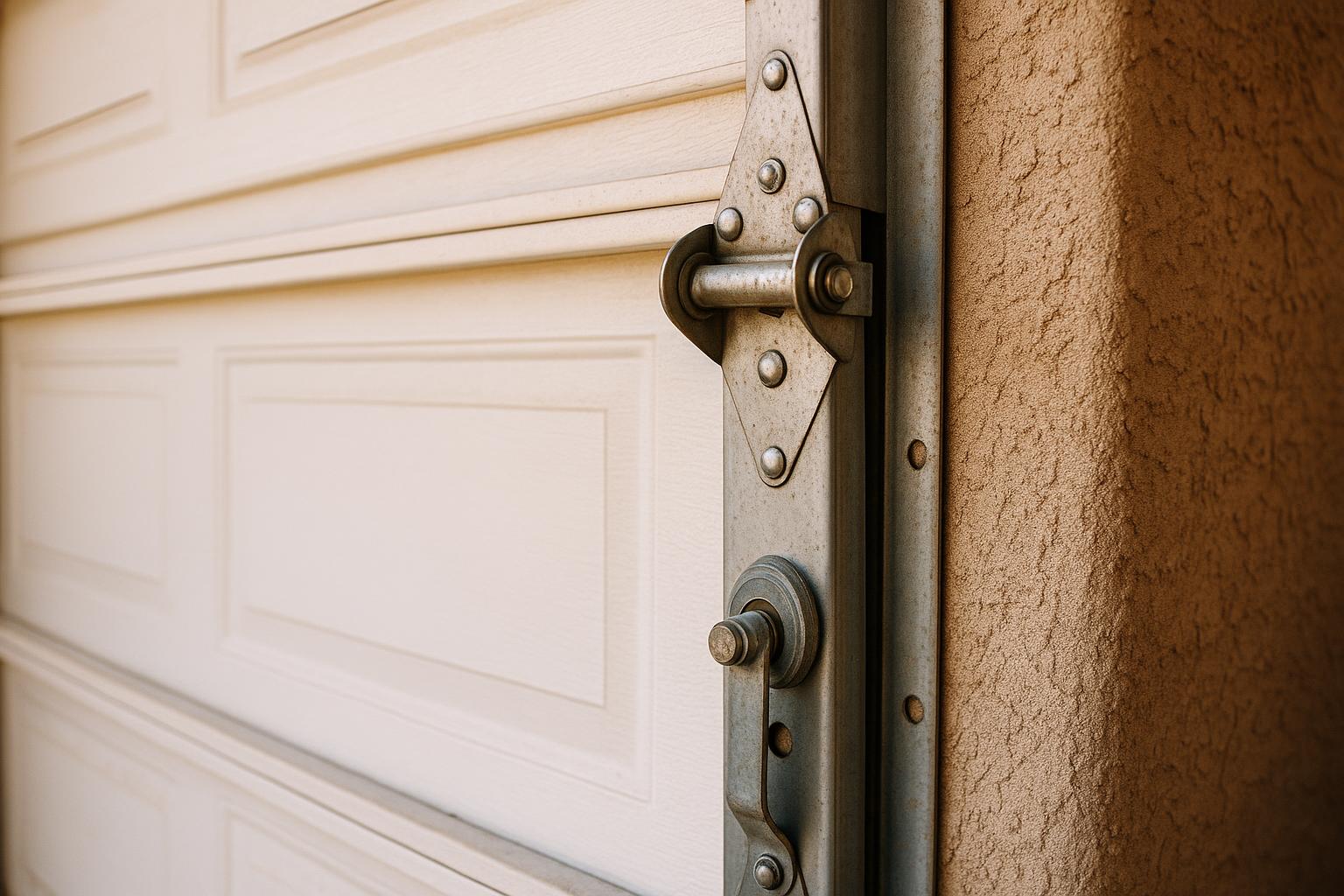
- Worn-out rollers. Steel rollers wear down over time, especially in Oro Valley's dry desert climate where dust and grit can accelerate the process. When the rollers deteriorate, they no longer glide smoothly along the tracks, creating that harsh grinding sound.
- Misaligned tracks. If the vertical or horizontal tracks have shifted even slightly, the door can scrape against them as it moves. This puts stress on the entire system and can eventually cause the door to get stuck or come off the track entirely.
- Lack of lubrication. Moving parts need lubrication to function properly. Without it, metal-on-metal contact creates friction, heat, and noise.
If you hear grinding, it's worth having a technician inspect the rollers and track alignment before the problem escalates.
Squealing or Squeaking
High-pitched squealing is usually a lubrication issue. The hinges, rollers, springs, and bearings in your garage door system all require periodic lubrication to operate smoothly. Over time — especially in the dry Oro Valley climate — lubricant dries out faster than it would in more humid regions.
What you can do: Apply a silicone-based or lithium-based garage door lubricant to the rollers, hinges, springs, and bearing plates. Avoid using WD-40 as a long-term lubricant — it's a solvent and degreaser, not a true lubricant, and it can actually attract more dust and debris.
If the squealing persists after lubrication, the rollers themselves may be worn out and need replacement. Nylon rollers are a popular upgrade because they're significantly quieter than standard steel rollers and require less maintenance.
Rattling or Vibrating
A rattling garage door often sounds worse than it is — but that doesn't mean you should ignore it. Rattling usually points to loose hardware somewhere in the system.
Check for:
- Loose nuts and bolts. Your garage door opens and closes roughly 1,500 times per year. That constant vibration can loosen nuts, bolts, and screws over time. A simple tightening with a socket wrench can often eliminate the rattle.
- Loose chain or belt. If you have a chain-drive opener, a loose chain will slap against the rail and create a rattling noise. Belt-drive openers are inherently quieter, but a worn belt can also cause vibration.
- Loose support brackets. The brackets that hold the tracks to the wall and ceiling can work themselves loose, causing the entire track to vibrate when the door moves.
Rattling is often the easiest noise to fix, but if you're unsure what's loose, a professional inspection can identify the source quickly.
Banging or Popping
A loud bang or pop when your garage door operates is harder to ignore — and for good reason. This noise often indicates a more serious issue.
Possible causes:
- Torsion spring issues. If you hear a loud bang coming from above the door, it could be a spring that's under excessive tension or one that's beginning to fail. Torsion springs are under extreme pressure and should never be adjusted or replaced by anyone other than a trained professional.
- Panel problems. A popping sound can sometimes come from the door panels themselves flexing or shifting as the door moves. This can happen when panels are damaged, warped, or improperly installed.
- Opener issues. Some banging noises originate from the garage door opener, particularly if the motor mounts have loosened or internal gears are wearing out.
Banging and popping noises warrant a professional inspection sooner rather than later, especially if they're new or getting louder.
Humming Without Movement
If your garage door opener hums or buzzes but the door doesn't move, the motor is running but failing to engage the drive mechanism. This could mean:
- The drive gear inside the opener has stripped
- The door is stuck or obstructed and the motor can't overcome the resistance
- The disconnect has been engaged (check for a dangling rope or handle on the opener rail)
A humming opener that can't move the door is working harder than it should, which can burn out the motor if left unaddressed.
When Noise Means It's Time for an Upgrade
Sometimes the noise isn't caused by a single failing component — it's the result of an aging system that's simply wearing out across the board. If your garage door is 15 to 20 years old and getting progressively louder despite maintenance, it may be more cost-effective to invest in a new door or opener rather than continuing to patch individual problems.
Modern garage doors and openers are engineered to run significantly quieter than models from even a decade ago. Belt-drive openers, nylon rollers, and insulated steel doors can transform your garage from the noisiest room in the house to one of the quietest.
Don't Wait Until the Noise Becomes a Breakdown
Every unusual garage door noise is a message. Some are minor and easy to fix. Others are early warnings of a component that's about to fail. The key is not to tune them out.
If your garage door has been getting louder and you're not sure what's causing it, the team at Oro Valley Garage Door Co can diagnose the problem and recommend the right fix — whether that's a simple lubrication, a roller replacement, or a more involved repair. We serve homeowners throughout Oro Valley, Marana, Catalina Foothills, Casas Adobes, and the greater Tucson area.
Give us a call or reach out online to schedule an inspection. A quiet garage door isn't a luxury — it's a sign that everything is working the way it should.