
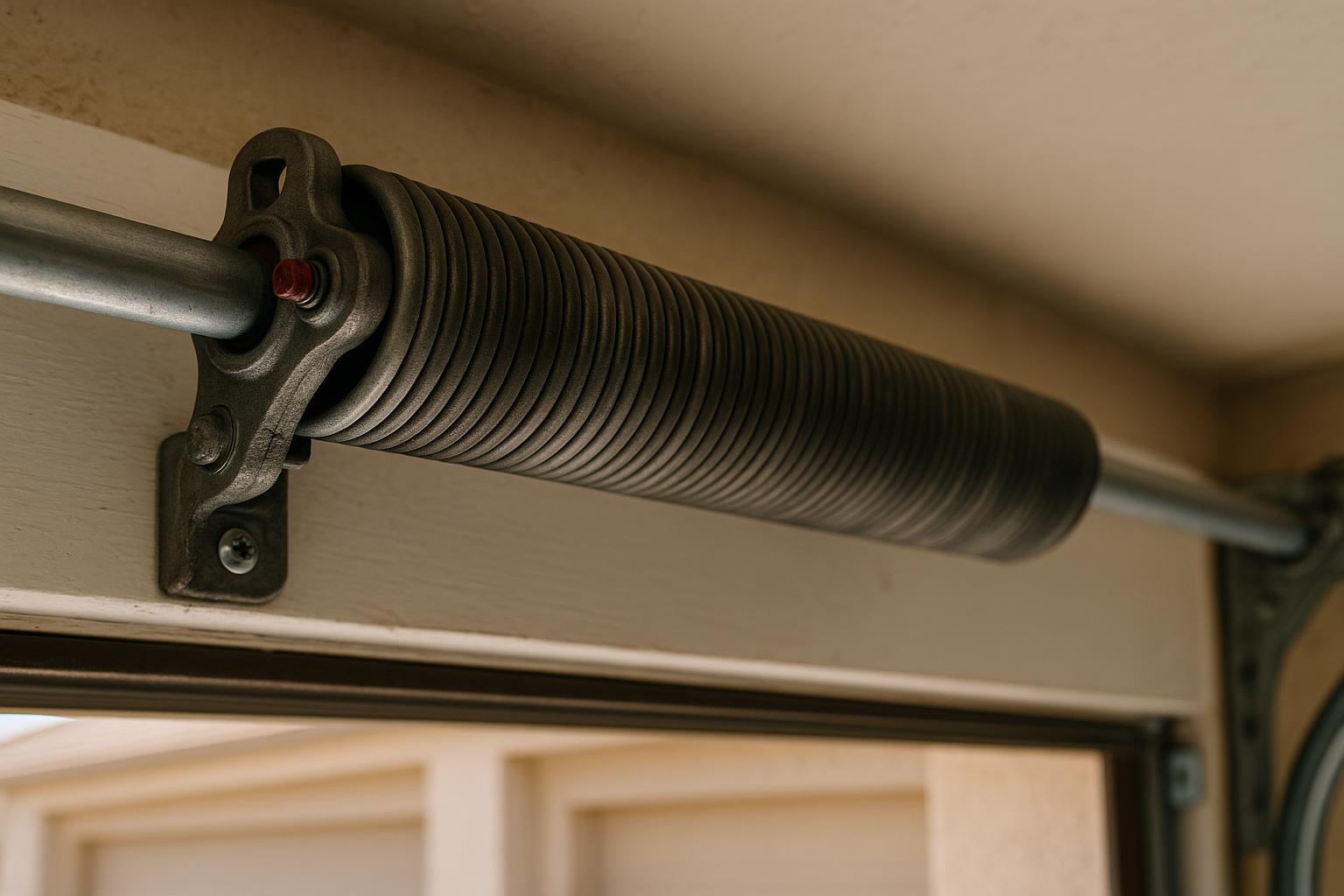
Your Garage Door Springs Are Trying to Tell You Something
If you've ever heard a loud bang from your garage and rushed out expecting to find something catastrophic, only to discover your garage door sitting crooked and refusing to move, you've experienced a broken spring firsthand. It's startling, inconvenient, and sometimes dangerous.
The good news? Garage door springs almost never fail without warning. There are clear signs that your springs are nearing the end of their lifespan, and catching them early can save you from an emergency situation, prevent damage to your opener, and keep your family safe.
Here in Oro Valley, where we deal with extreme summer heat and significant temperature swings between day and night, garage door springs face extra stress that can shorten their life. Let's walk through the warning signs every homeowner should know.
How Garage Door Springs Work
Before diving into the warning signs, it helps to understand what your springs actually do. Your garage door is heavy — most residential doors weigh between 130 and 350 pounds. The springs are what counterbalance that weight, making it possible for your opener (or your arms) to lift the door with minimal effort.
There are two main types of springs:
- Torsion springs — mounted on a metal shaft above the door opening. These are the most common type in modern garage doors.
- Extension springs — mounted along the horizontal tracks on either side of the door. These are more common in older installations.
Both types are under extreme tension, which is why spring replacement should always be handled by a professional. A spring under full tension stores enough energy to cause serious injury.
Warning Sign #1: The Door Feels Heavier Than Usual
This is often the earliest sign of spring trouble. If you disconnect your garage door opener and try to lift the door manually, it should move smoothly and feel relatively light. A properly balanced door will stay in place when you lift it halfway and let go.
If the door feels noticeably heavy, drops when you release it, or your opener seems to be straining more than usual, your springs are likely losing tension. They're still working, but they're not doing their full job anymore.
Warning Sign #2: The Door Opens Unevenly or Looks Crooked
If your garage door tilts to one side as it opens or closes, one of your springs may be weaker than the other. On doors with two torsion springs, uneven wear can cause one side to lift faster. With extension springs, one side may stretch more than the other.
A crooked door puts extra stress on your tracks, rollers, and opener, which can lead to a cascade of additional problems if left unaddressed.
Warning Sign #3: Visible Gaps in the Spring Coils
Take a look at your torsion spring above the garage door. When a spring is in good condition, the coils are tightly wound with no visible gaps. As a spring weakens and stretches, you may notice gaps or spaces forming between the coils.
If you see a clear separation or gap in the coils, the spring is either broken or very close to breaking. Do not attempt to operate the door — call a professional immediately.
Warning Sign #4: Loud Squeaking or Creaking Sounds
Some noise is normal for a garage door, but new or worsening squeaking, popping, or creaking sounds can indicate that your springs are under uneven stress or that the metal is fatiguing. This is especially common during Oro Valley's cooler winter mornings when metal contracts and lubrication thickens.
Regular lubrication can reduce noise, but if the sounds persist after maintenance, the springs themselves may be the problem.
Warning Sign #5: The Door Slams Shut Quickly
A garage door should close in a controlled, steady motion. If your door drops the last foot or two much faster than it should, the springs aren't providing enough resistance to control the descent. This is a safety hazard, especially if you have children or pets who might be near the door.
Warning Sign #6: Your Springs Are More Than 7-10 Years Old
Most standard garage door springs are rated for approximately 10,000 cycles — one cycle being a single open and close. If your household opens and closes the garage door four times a day, that's roughly 1,460 cycles per year, giving your springs a lifespan of about seven years.
If your springs are approaching or past that age, they're living on borrowed time even if they seem fine. High-cycle springs rated for 25,000 or more cycles are available and worth considering when it's time for replacement.
Warning Sign #7: Rust on the Springs
While Oro Valley's dry desert climate means less humidity than many parts of the country, rust can still develop on garage door springs over time. Rust increases friction on the coils, accelerates wear, and weakens the metal. If you notice rust forming on your springs, it's worth having them inspected to assess how much life they have left.
What to Do If You Notice These Signs
If you're seeing one or more of these warning signs, here's what we recommend:
- Stop using the door if it looks visibly damaged or broken. A door operating on a broken or failing spring can damage your opener or fall unexpectedly.
- Don't attempt a DIY spring replacement. The tension stored in garage door springs makes this one of the most dangerous home repairs. Every year, homeowners are seriously injured attempting this work.
- Call a qualified garage door technician. A professional can safely assess the condition of your springs, replace them if needed, and rebalance your door so everything operates smoothly.
At Oro Valley Garage Door Co, we keep common spring sizes stocked on our service vehicles so most replacements can be completed in a single visit. We serve homeowners throughout Oro Valley, Tucson, Marana, Catalina, Catalina Foothills, and Casas Adobes.
Should You Replace Both Springs at Once?
If your door has two torsion springs and one breaks, we strongly recommend replacing both at the same time. The second spring has the same age and wear as the first, which means it's likely to fail soon after. Replacing both springs together saves you from paying for a second service call and prevents the stress that a mismatched spring pair puts on your door system.
Don't Wait for the Bang
A broken garage door spring is one of the most common emergency calls we get. But it's almost always preventable. By paying attention to the warning signs — a heavy door, unusual noises, visible gaps in the coils, or simply knowing your springs are getting old — you can schedule a replacement on your terms instead of dealing with an unexpected breakdown.
If something doesn't seem right with your garage door, give Oro Valley Garage Door Co a call. We'll take a look, give you an honest assessment, and make sure your door is safe and reliable.