
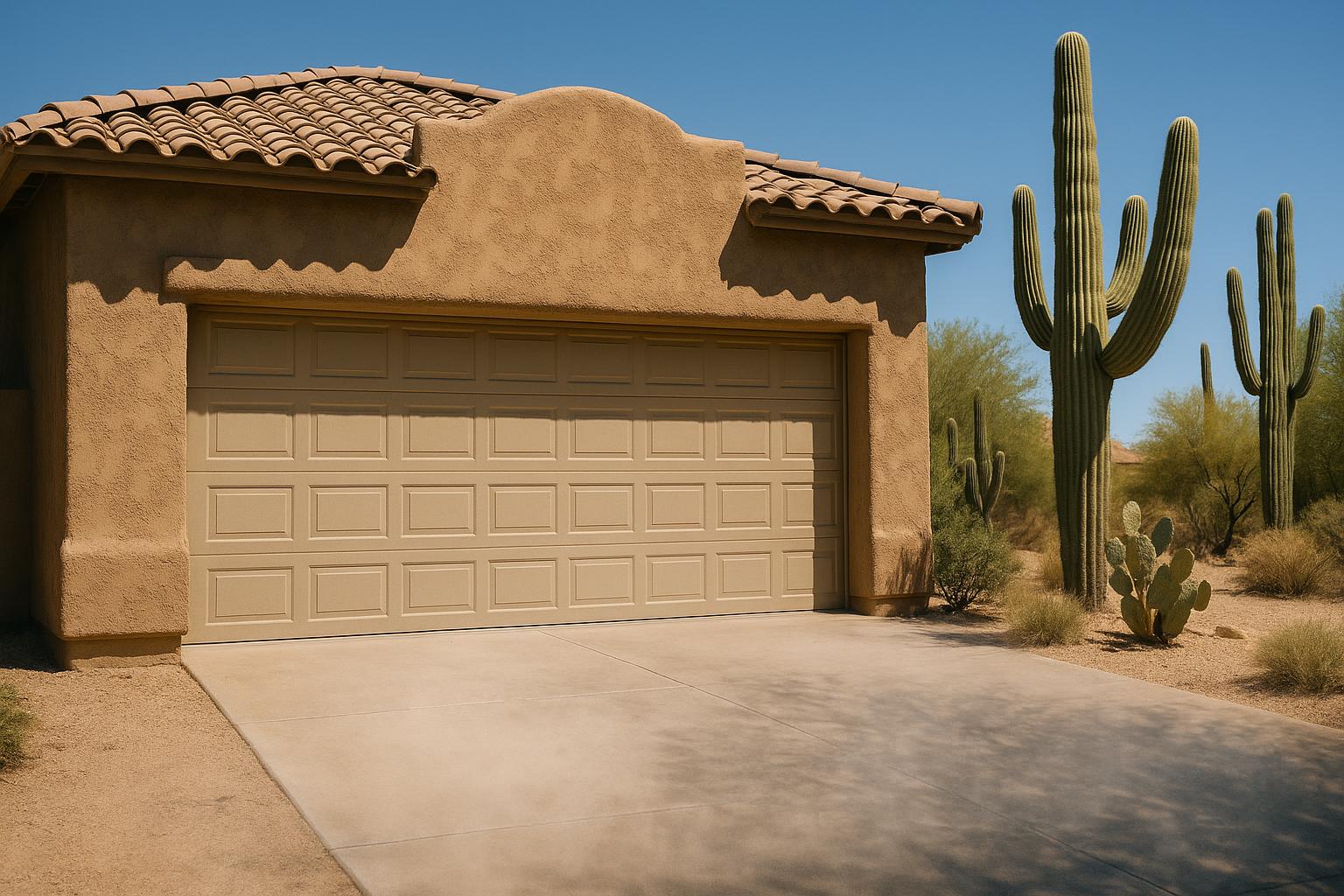
When Triple-Digit Temps Meet Your Garage Door
If you've lived in Oro Valley for even one summer, you know the heat is no joke. When temperatures climb past 100°F — and they regularly do from June through September — your garage door system takes a beating. Metal expands, lubricants dry out, sensors misfire, and opener motors overheat. The result? You press the button and nothing happens, or your door gets stuck halfway, or the opener runs but the door barely moves.
It's one of the most common calls we get during the summer months. And while it can feel alarming when your garage door suddenly stops cooperating, the causes are usually identifiable and fixable. Here's what's going on and what you can do about it.
Why Extreme Heat Affects Your Garage Door
Your garage door is the largest moving part of your home, and it's made up of multiple components that all need to work together — metal tracks, springs, rollers, cables, weatherstripping, an electric opener, and safety sensors. Every one of these parts is affected by extreme heat in some way.
Metal Expansion
Steel and aluminum expand when they get hot. In the intense Oro Valley sun, your garage door tracks can expand enough to cause binding or misalignment. When the tracks shift even slightly, the door can stick, move unevenly, or refuse to open altogether. You might hear scraping or grinding sounds that weren't there during cooler months.
Opener Motor Overheating
Your garage door opener has a motor, and like any motor, it generates heat when it runs. In an already-hot garage — where temperatures can easily reach 130°F or more — the motor doesn't have the cooler ambient air it needs to stay within safe operating temperatures. Most modern openers have a thermal protection feature that shuts the motor down when it overheats. This is actually a safety feature, but it means your door won't budge until the motor cools down.
Dried-Out Lubrication
The lubricant on your springs, rollers, and hinges breaks down faster in extreme heat. When these parts run dry, friction increases dramatically. The opener has to work harder, the door moves sluggishly, and the wear on every component accelerates. What should be a smooth, quiet operation turns noisy and strained.
Sensor Issues
The safety sensors at the bottom of your garage door opening use infrared beams. Direct sunlight hitting these sensors can interfere with the signal, making your opener think there's an obstruction. The door might refuse to close, or it might reverse immediately after you try to shut it. This is especially common in west-facing garages during late afternoon.
Weatherstripping Deterioration
The rubber weatherstripping along the bottom and sides of your garage door dries out, cracks, and hardens in the Arizona sun. When it deteriorates, it can actually stick to the garage floor or create drag that makes the door harder to open. It also stops doing its job of keeping dust, pests, and hot air out of your garage.
What You Can Do Right Now
Before you call for a repair, there are a few things you can try on your own to get your garage door working again.
- Wait it out. If your opener motor has overheated, give it 15 to 30 minutes to cool down. Don't keep pressing the button — you'll just reset the cooldown timer and could damage the motor.
- Use the manual release. Every garage door opener has a manual release cord, usually a red handle hanging from the track. Pull it to disconnect the door from the opener, then lift the door by hand. This is useful if you need to get your car out while the motor cools down.
- Check the sensors. Look at the small lights on your safety sensors. If one is blinking, the beam is misaligned or blocked. Try shading the sensors from direct sunlight with a small piece of cardboard. If the door closes normally after that, sun interference is your culprit.
- Lubricate moving parts. Use a silicone-based garage door lubricant on the springs, rollers, hinges, and tracks. Don't use WD-40 — it's a solvent, not a long-term lubricant, and it'll dry out even faster in the heat.
- Inspect the tracks. Look for visible gaps between the track and the wall brackets, or spots where the track looks bowed. Don't try to adjust the tracks yourself — they're under tension and can be dangerous to work on.
When to Call a Professional
Some heat-related garage door problems are easy fixes. Others point to deeper issues that need professional attention. Call a garage door technician if:
- The door is visibly off-track or crooked when it moves
- You hear loud popping or snapping sounds
- The door feels extremely heavy when you try to lift it manually (this could indicate a spring problem)
- The opener runs but the door doesn't move at all
- You notice frayed cables or damaged springs
- The problem keeps coming back even after you've lubricated and checked everything
These situations can involve components under high tension, and attempting a DIY fix can lead to serious injury or further damage to your door system.
Preventing Heat-Related Problems Before They Start
The best way to avoid getting stuck with a non-functioning garage door in July is to schedule maintenance before summer hits. A professional tune-up typically includes lubrication of all moving parts, inspection and adjustment of tracks and hardware, testing of the opener and safety sensors, and evaluation of springs and cables for wear.
Here in Oro Valley, we recommend scheduling this service in late spring — April or May — so everything is in top shape before the extreme heat arrives. It's a small investment that prevents emergency calls and extends the life of your entire garage door system.
If your garage is particularly hot, consider adding insulation to your garage door. Insulated doors help regulate the temperature inside the garage, which protects your opener motor and keeps lubricants from breaking down as quickly. It also makes a noticeable difference if you use your garage as a workspace or have rooms above it.
Don't Let the Heat Win
A garage door that won't open on a 110°F day is more than an inconvenience — it can trap your car, compromise your home's security, and leave your garage exposed to the elements. Most heat-related issues are preventable with regular maintenance and a little awareness of how the Arizona climate affects your equipment.
If your garage door is giving you trouble this summer, Oro Valley Garage Door Co is here to help. We understand the unique challenges that come with living in the Sonoran Desert, and we keep our trucks stocked with the parts needed to get your door back on track — usually in a single visit. Give us a call and let's get it sorted out before the next heat wave rolls in.